


Xbox
Microsoft Corporation
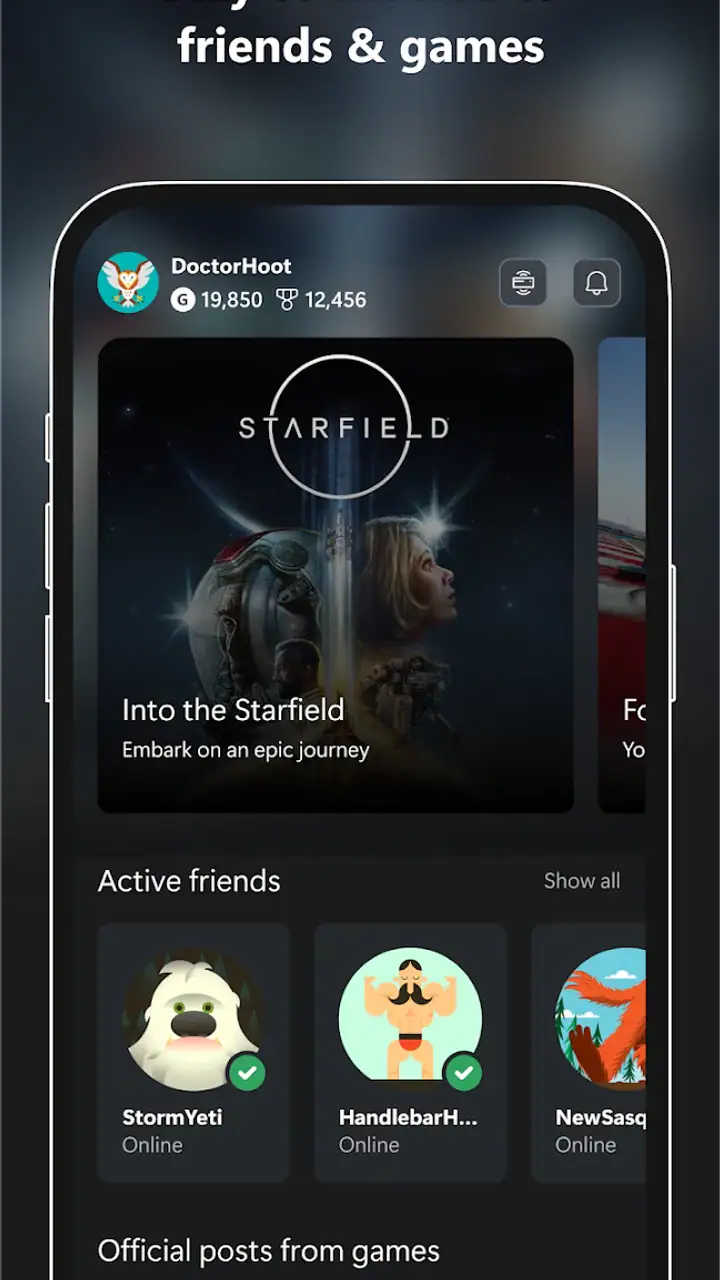
I spent time using Xbox as a companion app rather than treating it like a smaller version of a console. That distinction matters. On Android and iOS, its main value is keeping your gaming community within reach when you are away from the television or computer. I found it most useful for checking what friends are doing, staying in touch, and handling parts of my Xbox routine from a phone. It is free, made by Microsoft Corporation, and sits in the entertainment category, with a Teen age rating.
The app has been around since November 19, 2013, so it feels like an established part of the Xbox ecosystem rather than a new experiment. Its current version is 2603.1.2, and it supports devices running Android 8.0 or later. That broad compatibility is helpful if you use an older phone, although the experience can still depend on the device, connection, and how deeply you already participate in Xbox services.
How Xbox builds trust around your gaming account
My first impression was that this is an account-centered app, not a casual entertainment feed. You are connecting it to a gaming identity, friends, conversations, and activity that may be personal. That makes trust more important than a flashy interface. Microsoft is clearly the developer, and the app has a large existing audience: it has passed 100 million installs, with an average rating of 4.5 from around 2.2 million ratings. Those figures suggest that it is widely used, but popularity alone is not a reason to hand over attention or personal information without checking the choices presented during setup.
I recommend approaching the first launch slowly. Sign in with the Microsoft account you actually intend to use for Xbox, then look at the account and privacy areas before spending time customizing the app. This is a simple habit, but it prevents a common frustration: opening the app expecting one profile and finding that messages, friends, or activity are attached to another account. If your household shares devices, signing out after use is also sensible, especially when conversations or account details are visible on the phone.
The app’s purpose is easy to understand: it keeps you connected to your gaming community. In daily use, that means the phone becomes a convenient doorway to Xbox-related social activity instead of requiring you to sit in front of a console. I like that role because it avoids pretending that a phone is the best place for every gaming task. For me, the strongest reason to keep it installed is continuity between gaming sessions, not replacing the console experience.
Latest News

Uber Eats Under Pressure: What Happens When Delivery Goes Wrong

How QR & Barcode Scanner Adapts to Android and iOS Innovations

Why Waze Navigation & Live Traffic Is Your Essential Travel Companion

CapCut Mastery: Unleash Hidden Features for Pro-Level Editing

How OS Updates Enhance Roblox Adventures

Teacher Simulator: Exam Time Turns Quick Classroom Judgments into a Repetitive Loop
There is also a useful difference between installing an official app and relying on scattered alternatives. A web browser can sometimes handle account pages, and general messaging apps can cover conversations, but neither gives the same Xbox-focused context. The official app keeps the gaming identity, contacts, and related activity together. The trade-off is that it is less flexible than using a general-purpose communication tool, particularly if your friends do not spend much time inside the Xbox ecosystem.
What I checked before relying on it
I paid attention to visible account controls rather than assuming that every setting was automatically private. The practical questions are straightforward: which account is signed in, who can interact with you, what activity is visible, and whether notifications are worth allowing. I would not enable every prompt by habit. Notifications can be useful for timely conversations, but they can also expose the fact that you are active or interrupt your day with messages that could wait.
The app’s Teen rating is another reason to treat those choices seriously. It is not a substitute for checking settings, and it does not tell you how the app will fit a particular family’s rules. If a younger person uses the account, I would review the available Microsoft and Xbox account controls separately and make sure the phone itself is protected. The app can be convenient for family gaming, but convenience should not replace supervision or a clear agreement about communication.
Gallery
One subtle point is that trust is not only about what the app displays. It is also about what happens when you move between the app and other Microsoft services. A feature may ask you to authenticate again or open another account area. I prefer that kind of clear boundary to an unexplained background action, but it means you should read each screen instead of tapping through quickly. When an app is tied to a long-standing account, small sign-in decisions can have a wider effect than they appear to at first.
Controls that make everyday use more manageable
The most useful control for me is notification management. I would start with only the alerts that matter, then add more if the app proves helpful. A person who mainly wants to check their community occasionally may prefer quiet notifications and manual visits. Someone arranging a gaming session may want timely message alerts. These are different use patterns, and the right choice is not the same for everyone.
Conversation controls deserve similar attention. If you use the app for group communication, keep in mind that the phone is a more exposed environment than a television screen in a private room. Lock-screen previews can reveal names or message text to anyone who sees the device. I usually recommend turning previews down or off when privacy matters. That is a phone-level choice, but it has a direct effect on how safely the Xbox experience fits into everyday life.
Account switching is another area where a little discipline helps. If you manage more than one Microsoft identity, avoid assuming that the app will always make the active account obvious. Before sending a message or checking activity, glance at the profile context. This takes seconds and can prevent an embarrassing message from going through the wrong identity. It is one of those small workflows that a store summary will never explain, but it matters in real use.
I also found it helpful to separate social use from account maintenance. When I am simply checking in with friends, I do not need to explore every account page. When I am changing privacy or communication choices, I give the task my full attention. That separation reduces accidental changes and makes it easier to remember what I deliberately selected.
Moments when data sensitivity matters most
The most sensitive moments are sign-in, messaging, profile visibility, and notifications. Sign-in links the app to an account that may contain a long history of gaming activity and social connections. Messaging creates content that can be private even when the surrounding gaming activity is public. Profile and activity choices affect what other people can learn about your habits. Notifications can place pieces of that information on the phone’s lock screen.
I would be especially careful when using the app on a shared tablet or a family phone. The free price makes it easy for several people to install, but the account itself should not be treated as communal just because the device is. Signing out, using the phone’s screen lock, and checking which account is active are basic steps that make a meaningful difference.
Travel is another realistic example. Imagine waiting for a train and opening the app to answer a gaming message. That is convenient, but public spaces change the privacy calculation. Someone nearby may see the screen, and public Wi-Fi may not be the environment where you want to handle account changes. I would use the app for a quick check, avoid changing sensitive settings in a crowded place, and postpone anything important until I am on a trusted connection and can concentrate.
Notifications can create a second kind of data-sensitive moment: they blur the line between private activity and visible phone behavior. Even if the app itself is locked behind your device security, a message preview may appear before you unlock it. I consider notification text a separate privacy decision, not a minor detail. The best setup for a solo player who keeps a phone in a pocket may be different from the best setup for someone whose phone is always on a desk at work or school.
Where the app gives me useful agency
Good account control is not just having many settings; it is being able to understand and change the choices that affect you. Xbox works best when I treat it as a dashboard for decisions rather than an automatic background companion. I decide whether alerts are worth the interruption, whether I want to be reachable at a given time, and whether the phone is an appropriate place to handle account matters.
A practical routine is to review communication and privacy choices after installing the app, then revisit them when your circumstances change. A new phone, a shared device, a change in household rules, or a different gaming group can all make an old setup less suitable. I would also check the app after updates instead of assuming that my preferred experience is unchanged. The current version is 2603.1.2, and keeping software current is generally useful, but updates are a good reminder to look at visible choices again.
There is a trade-off between being easy to reach and keeping a quiet digital life. If you use Xbox primarily to coordinate sessions, notifications and social access may justify the extra connection. If you play alone, rarely message anyone, or dislike account-linked apps, the same connection may feel unnecessary. In that case, the console itself or a browser-based account check could be a better fit. The app is not automatically valuable simply because it is free.
I would also avoid confusing convenience with control over every part of the Xbox ecosystem. The app can make community access easier, but it does not remove the need to understand the broader Microsoft account environment. When a setting leads into an account page or another service, read the wording and confirm the account before saving anything. That extra pause is worthwhile because the consequences of a mistaken choice can extend beyond one phone session.
Real situations where Xbox earns a place on my phone
For a regular player, the clearest use case is coordinating a session without turning on the console. I can check in during a lunch break, respond to a friend, and return to gaming later. This is more natural than sending a separate message through a general app when the conversation is specifically about Xbox. The focused context is the advantage: I am less likely to lose the thread among unrelated chats.
It is also useful for people who move between rooms or devices. A console may be in a shared living space, while the phone is always nearby. The app lets the social side of gaming follow me without requiring the main screen. That is particularly handy when someone else is watching television or when I am waiting between errands.
Families should think about the app differently. It can help a parent understand where Xbox communication happens, but that only works if the parent reviews the account structure and device access. I would not install it and assume that the Teen rating solves family-safety questions. The responsible approach is to combine the app’s visible controls with the account’s broader settings and the household’s own rules.
On the other hand, I would skip it if your gaming group uses another platform, you do not want Microsoft account notifications on your phone, or you only play occasionally and have no need for mobile access. Installing another account-connected app adds maintenance, and the benefit may be too small to justify it. People who want a general gaming news reader or a universal chat tool should also look elsewhere; this app is more focused than those alternatives.
How it compares with the usual alternatives
Compared with a browser, the app feels more direct for repeated Xbox use. A browser is better when you want a one-off account task without keeping a dedicated app installed. The app wins when you want a persistent, phone-friendly connection to your Xbox community. The browser wins for people who prefer fewer installed services or who use several gaming platforms and do not want to organize their phone around one ecosystem.
Compared with general messaging apps, Xbox has the advantage of context. You are not trying to explain which account or gaming identity a conversation belongs to. A general messenger is better when your friends are spread across consoles, computers, and other communities. It may also offer broader communication habits that your group already understands. My choice would depend on where the people I actually play with already communicate.
Compared with using only the console, the phone app is more convenient but less immersive. The console remains the natural place for gaming itself, while the phone is better for quick checks and communication away from the main setup. Trying to use the phone as a complete replacement would leave me disappointed. Using it as a companion gives a much clearer picture of its strengths.
The large audience and strong average rating make Xbox an easy app to consider, but they do not erase individual trade-offs. A highly social player may find it essential, while a private, occasional player may see little reason to add it. I would judge it by the specific gap it fills in your routine: if you need mobile access to Xbox relationships and account activity, it has a clear purpose; if not, its presence may simply create another stream of alerts.
My cautious verdict after using it
I recommend Xbox to people who already spend time in the Xbox community and want a practical mobile connection to it. The free entry point, established developer, broad Android compatibility from version 8.0 onward, and large user base make it approachable. I especially value it for quick coordination, checking in away from the console, and keeping gaming conversations in their proper context.
My recommendation comes with a condition: set it up deliberately. Check the signed-in account, choose notifications instead of accepting every prompt, protect message previews on shared or public devices, and review privacy and communication controls before relying on the app. Those steps do more for a trustworthy experience than simply installing the latest version.
It is not the right choice for everyone. If you want a platform-neutral chat app, a lightweight browser visit, or a gaming experience with no account-linked social layer, another option may suit you better. But for an Xbox player who wants the community to remain available between sessions, the best reason to use Xbox is controlled convenience: useful access without surrendering your attention by default.
Overall, I see it as a capable entertainment companion rather than a must-have for every phone. Microsoft Corporation has built an app with a clear role, and its value increases when your friends and gaming habits already live in the Xbox environment. Use the controls as active choices, keep sensitive moments in mind, and it becomes a more comfortable part of a gaming routine. If that sounds like your situation, Xbox is worth trying; if your needs are broader or more private, keep the app off your phone and use a simpler alternative.
FAQs for Xbox
What devices are compatible with the Xbox app?
The Xbox app is compatible with a wide range of devices, including Android and iOS smartphones and tablets. It also works on Windows PCs and laptops. To ensure optimal performance, check that your device meets the minimum system requirements, such as the latest operating system updates and sufficient storage space.
Can I stream games using the Xbox app?
Yes, the Xbox app allows you to stream games directly from your Xbox console to your mobile device or PC. This feature, known as remote play, requires a stable internet connection and an Xbox console. It’s a great way to play your favorite games on the go without being tied to your console.
How do I manage my Xbox friends and messages?
The Xbox app provides a user-friendly interface to manage your friends list and messages. You can easily add new friends, chat with existing ones, and join party chats. Notifications keep you informed about your friends’ activities and game invites, ensuring you stay connected with your gaming community.
Does the Xbox app support cloud gaming?
Yes, the Xbox app supports cloud gaming, allowing you to play a wide selection of games directly from the cloud. This feature is part of Xbox Game Pass Ultimate and requires a subscription. It allows you to enjoy gaming without the need for downloads, provided you have a reliable internet connection.
What features are available for game management in the Xbox app?
The Xbox app offers robust game management features, such as the ability to browse and install games from the Xbox Game Pass library. You can also update games, manage your console’s storage, and even use the app as a remote control for your Xbox console, providing a seamless gaming experience.
Pros
- Seamless cross-platform play.
- Extensive game library available.
- Regular updates and new features.
- User-friendly interface design.
- Robust parental controls offered.
Cons
- Requires high-speed internet for optimal use.
- Some features need a subscription.
- Large storage space required.
- Occasional app crashes reported.
- Limited customization options.


